TB-500 is a peptide found in all human tissues except red blood cells. As a G-actin sequestering peptide, it plays a crucial role in tissue repair and remodeling. TB-500 is important for cellular architecture, as it binds to G-actin to promote organized healing and reduce scar tissue formation. Its influence on cell migration and stem cell differentiation makes it a key focus in regenerative medicine.
TB-500 has been studied for its activity across several key biological pathways relevant to tissue repair, immune modulation, and cellular recovery:
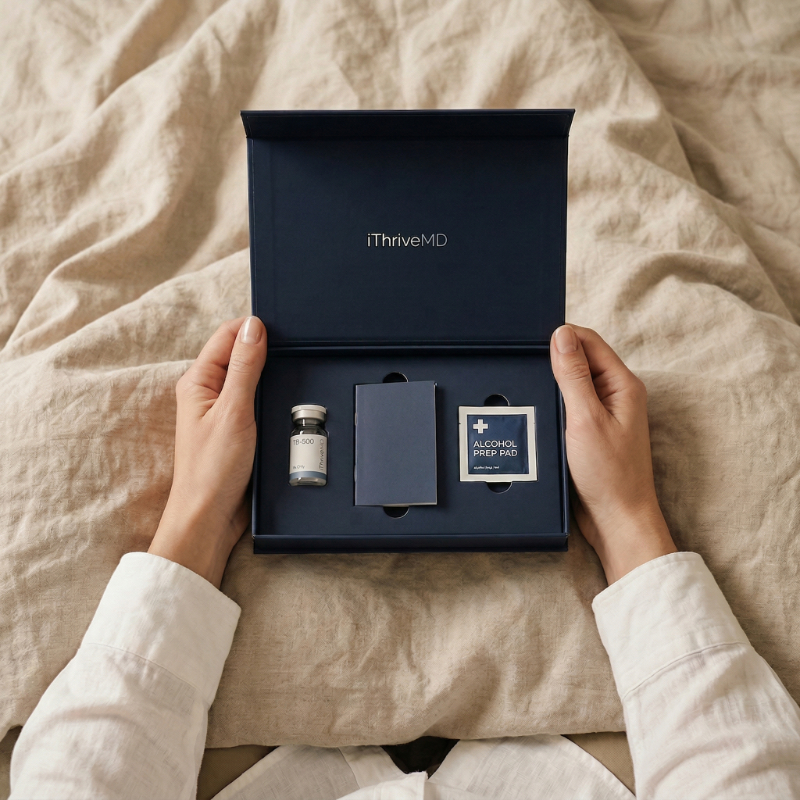

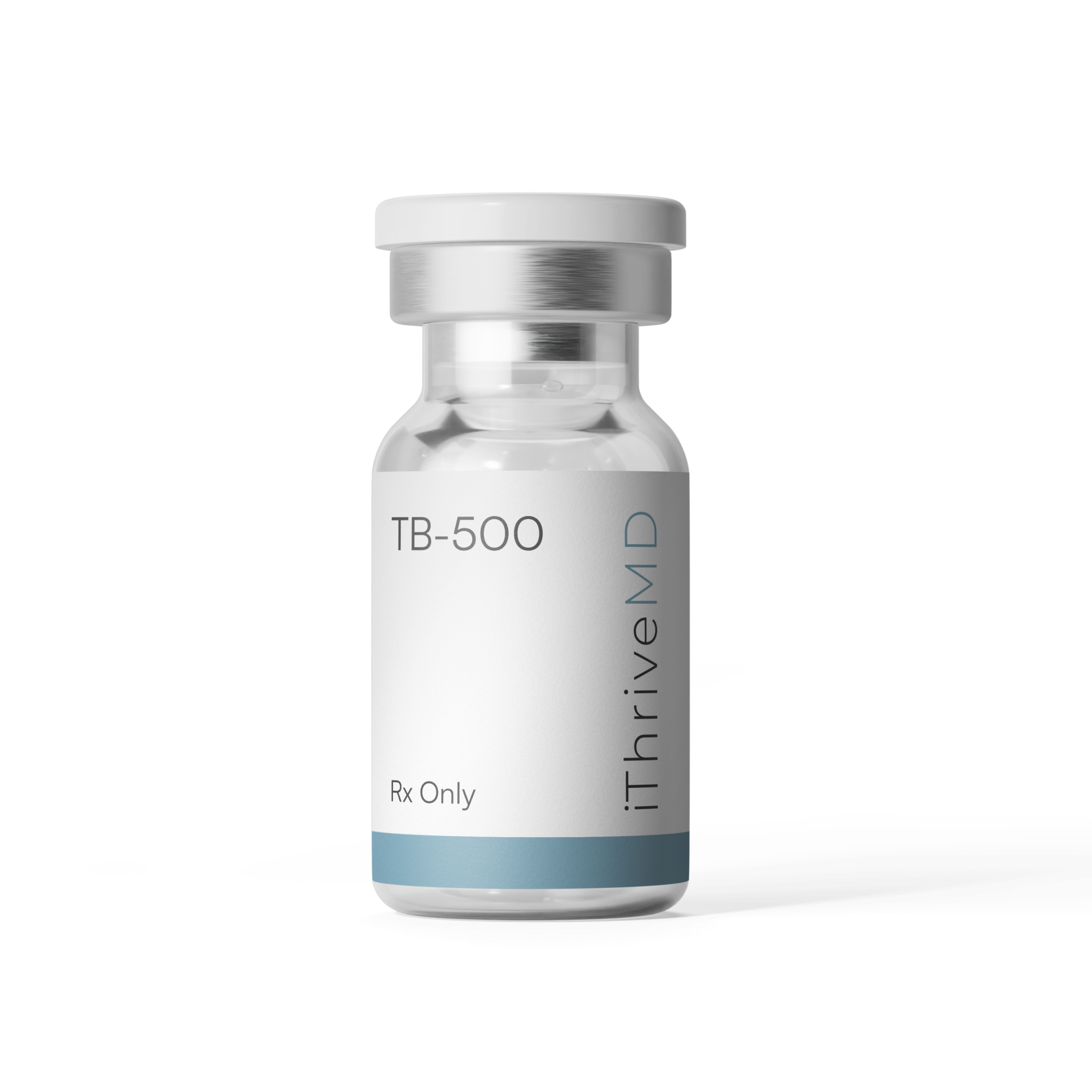
TB-500 is a peptide under investigation for its roles in tissue remodeling, cell migration, and soft-tissue recovery. At iThriveMD, providers may consider TB-500 as part of a peptide protocol for patients dealing with sports injuries, tendon or ligament concerns, chronic soft-tissue injuries, or immune support goals. All use requires a medical evaluation and a provider’s prescription.
TB-500 and BPC-157 work through different mechanisms and are not directly interchangeable. BPC-157 primarily drives angiogenesis and cytoprotective signaling via VEGF and nitric oxide pathways, while TB-500 promotes cell migration and tissue remodeling by sequestering G-actin. Many providers prescribe them together in a Wolverine peptide stack because their mechanisms are complementary — addressing different phases of the healing process.
The standard protocol at iThriveMD is 500 mcg via subcutaneous injection, 5 days per week. Cycling is required—typically 3 months on, 1 month off.
No, this is a common misconception about peptide therapy. Thymosin Alpha-1 (Ta1) and TB-500 (a fragment of thymosin beta-4) are distinct peptides with different structures, mechanisms, and applications. Ta1 is a 28-amino-acid peptide that focuses on immune modulation, while TB-500 is a fragment of thymosin beta-4, which consists of 43 amino acids and plays a role in cell migration and tissue repair. Although they both share the name “thymosin” because they were originally isolated from thymic tissue, they serve entirely different functions.
While TB-500 has been studied for its role in cell migration and tissue repair, its effects on hair growth have not been established through clinical research. Patients interested in hair-related peptide therapy should discuss options like GHK-Cu — which has been studied for hair follicle support — with their provider during a consultation
“I’ve lost 31 pounds, and my sleep is fantastic!”

Love the staff and all the amazing encouragement and most definitely the results of the weight loss medication!

The Doctors here are very knowledgeable and friendly. I have been comming here for 5 months and have had such amazing weight loss! I highly recommend I Thrive MD.

They are very good at explaining & guiding me in the direction I should go with procedures without “selling”, which I super appreciate.

I had my first visit at IThrive Encinitas and I am happy I did! The facility was well maintained, clean and bright and as soon as I arrived I was greeted by 2 very polite and professional Receptionists.

The Dr was very thorough and patiently answered all my questions. My first visit was awesome!

I couldn’t be more thankful for iThriveMD! Since I started my journey mid October I’ve lost 25 pounds and feel like a new person! I have way more energy and don’t feel uncomfortable in my own skin anymore.

Their new wellness center in Mission Valley is awesome! So calming and comfortable from the moment you walk in.

I have been coming to iThriveMD ever since they opened up and I am obsessed! This is like my new wellness place that I enjoy coming to when I am feeling down and need to be lifted up!

I’ve been on it for 3 months and lost35 pounds. Fortunately I had no negative side effects. I feel great. Everyone here was very polite and very welcoming.

Great location! Exceptional staff! I truly feel taken care of here! 10/10 recommend.